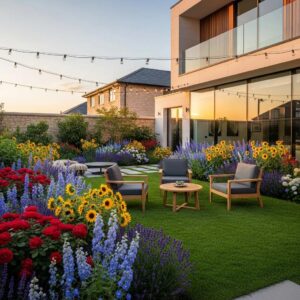
Strategic landscape lighting for holiday curb appeal does more than just showcase festive decorations—it enhances safety, highlights architectural details, and creates an inviting atmosphere that sets your Metro Atlanta home apart. By thoughtfully illuminating walkways, trees, and entryways, you can extend your home’s visual impact into the evening, making it feel warm and welcoming to guests and passersby alike.
In this guide, we’ll explore how professional holiday lighting installations can improve your home’s aesthetic and security while celebrating the season with style and sophistication.
Landscape Lighting for Holiday Curb Appeal That Instantly Impresses
How Does Holiday Landscape Lighting Transform Your Home’s Curb Appeal?

Thoughtful landscape lighting for holiday curb appeal can completely change how your home looks and feels after dark. Instead of disappearing once the sun goes down, your architecture, trees, and walkways stay visible and inviting. Well-placed uplights can trace the lines of columns, stonework, or gables so the structure still reads clearly from the street. Path and step lights guide guests to the front door, easing circulation and reducing the chance of trips on unfamiliar steps or uneven pavers.
Holiday décor also looks more intentional when it is integrated into a lighting plan. Spotlights aimed carefully at wreaths, garlands, and porch details bring them forward without washing out the entire facade. Choosing a consistent color temperature, such as warm white with a few subtle accent colors, helps seasonal pieces feel coordinated instead of cluttered. When you think of landscape lighting for holiday curb appeal as a way to frame what you already love about your home, it becomes easier to decide what to light and what to leave in softer shadow.
Energy-efficient LED fixtures and timers allow you to run displays for longer evenings without a large jump in utility bills. Smart controls make it simple to dim lights later at night, set schedules for different days of the week, or shift from everyday settings to a more festive holiday scene.
What Are The Key Benefits Of Outdoor Christmas Lighting For Homeowners?
For most homeowners, outdoor Christmas lighting delivers a mix of visual appeal, safety, and comfort. A well lit exterior naturally draws the eye, which can raise perceived home value and give guests a strong first impression before they even reach the door. Even modest string lighting along eaves or rooflines can create a defined outline that looks polished rather than overdone.
Safety is another major advantage. Even, reliable lighting along paths, driveways, and steps helps family, guests, and delivery drivers move around without guessing where edges and changes in level might be. This is especially important during busy evenings when cars, kids, and visitors are all arriving at different times.
There is also a comfort factor. When exterior lighting supports your wreaths, porch décor, and any yard displays instead of overpowering them, you get a warm, welcoming atmosphere that feels festive without being harsh. Modern LED systems reduce energy use and heat output compared with older incandescent strands, so maintenance is easier and operating costs stay reasonable through the season.
How Does Landscape Lighting Highlight Festive Holiday Decor?
Landscape lighting works best for holiday curb appeal when it is used to complement, not compete with, seasonal décor. Uplighting at the base of evergreens or shade trees can create striking silhouettes that naturally frame ornaments or string lights. Cross lighting on shrubs or low plantings adds depth, making the front yard feel layered rather than flat in nighttime photos and drive by views.
On the house itself, narrow beam spotlights aimed at a front door wreath, porch columns, or a feature window help those focal points stand out. Soft downlights tucked under eaves or porch ceilings create a gentle wash that flatters garlands and ribbons without creating glare. Along walkways, low profile fixtures can mark the route while visually tying into lit planters, entry steps, or a decorated mailbox.
Good design also respects neighbors and the night sky. Using shielded fixtures, low glare lenses, and thoughtful aiming keeps light on your property instead of in nearby windows. When all of these elements come together, landscape lighting for holiday curb appeal does more than brighten the yard. It supports your decorations, makes the property easier to navigate, and gives your home a balanced, welcoming presence all season long.
What Are the Best Holiday Landscape Lighting Ideas to Enhance Festive Outdoor Decor?

When you are planning landscape lighting for holiday curb appeal, the goal is usually to make the house feel warm and inviting without turning the yard into a light show. The most reliable way to do that is to start with the structure of the home and then layer in festive details. A classic approach is a warm white roofline paired with simple garland lighting. Tracing the eaves with evenly spaced LED lights and weaving similar lights through railings or porch garlands gives the house a clean outline that still feels seasonal.
Architectural uplighting can add another layer without making things busy. A few well placed fixtures at columns, stone piers, or the main entry help the architecture read clearly from the street after dark. When the lighting is aimed correctly, it creates soft highlights and shadow that give your facade more depth. Pathway and step lights then complete the picture by guiding guests safely to the front door, which is especially helpful when you expect more visitors and deliveries during the holidays.
Trees and larger shrubs offer some of the best opportunities to add drama. A single spotlight placed to silhouette an evergreen or a favorite front yard tree can make ornaments and string lights stand out. If you enjoy color, smart fixtures or color changing LEDs work best when they are used as accents rather than everywhere. A single tree in soft color, paired with warm white lighting on the house, can feel festive without overwhelming the design. When you treat your lighting plan as part of your landscape rather than an add on, you get landscape lighting for holiday curb appeal that still looks good when the season is over.
Choosing The Right Fixtures For Holiday Landscape Lighting
The fixture type you choose has a big impact on how the display looks and how easy it is to maintain. Uplights are most effective for columns, trunks, and focal trees, where the goal is to pull the eye upward and outline interesting shapes. Path lights are better for low, even illumination along walkways and edges, and they should be spaced so the light overlaps slightly instead of creating “spotty” patches. String or roofline lights are ideal for defining the outline of the house and can also be used in shrubs or along fences when you want a softer edge.
Here is a simple comparison that can help you match fixture types to specific holiday goals while keeping energy use in mind.
| Lighting Type | Best Use / Visual Effect | Relative Energy Use |
|---|---|---|
| Uplights | Emphasize columns, trunks, and vertical features | Low to medium with LED |
| Pathway lights | Guide guests and define routes | Low with LED |
| String / roofline lights | Outline eaves and railings | Low to medium with LED |
| Spotlights | Highlight wreaths, planters, and focal trees | Low to medium with targeted LED |
| Smart outdoor systems | Color control and scheduling | Low when paired with efficient LED |
Most homeowners who want landscape lighting for holiday curb appeal will end up using a mix of these. The key is to keep the number of fixture types manageable, repeat them consistently, and choose LEDs so longer runtimes do not translate into steep utility bills.
Classic Vs. Colorful Holiday Lighting Schemes
Classic holiday lighting usually leans on warm white tones, restrained placement, and fixtures that are scaled correctly to the home. A color temperature in the range of about 2700 to 3000 Kelvin gives a soft, inviting glow that works well with brick, stone, and painted siding. When rooflines, porch columns, and a few trees are lit this way, the result feels intentional and calm. Keeping the brightest light away from bedroom windows and reducing glare for neighbors also helps the display feel more polished.
More vibrant, multicolored schemes can be just as successful when they are treated as accents instead of the main layer. One common approach is to keep the architecture in warm white and reserve color for a single feature tree, a group of shrubs, or a front porch vignette. Smart controllers make it easy to change colors or run gentle sequences in the evening without constant animation that distracts from the house itself. Leaving some darker spaces between lit areas gives the eye places to rest so the display feels cheerful rather than chaotic.
Whether you prefer classic white or lively color, a thoughtful plan that respects the lines of your home, uses efficient LED fixtures, and balances light and shadow will give you landscape lighting for holiday curb appeal that looks good from the street, photographs well, and remains comfortable to live with all season.
How Can Professional Holiday Lighting Installation in Atlanta Improve Safety and Style?

For many Atlanta homeowners, the goal of landscape lighting for holiday curb appeal is to create something that looks intentional, festive, and safe. Professional installation helps with all three. Licensed installers size circuits correctly, balance loads across outlets, and use outdoor-rated connections so lights can run for hours without tripping breakers or creating hot spots. They also mount fixtures and roofline lights securely, which lowers the risk of loose cords, damaged shingles, or tripping hazards along paths and steps.
On the style side, professionals look at the house from the street and design a layout that works with the architecture instead of fighting it. They consider rooflines, columns, trees, and existing landscape features, then decide where lighting will have the most impact. The result is a display that highlights the best parts of the property and keeps clutter to a minimum. When landscape lighting for holiday curb appeal is planned this way, it feels like a natural extension of your year round landscape design rather than a temporary bolt on.
Why Expert Installation Matters For Complex Holiday Designs
Simple strands on a small porch are usually manageable on your own, but many modern displays are more complex. Tall gables, mature trees, and multi level hardscapes can be difficult and unsafe to reach without the right ladders, safety gear, and experience. Professional crews work at height every day and know how to protect both themselves and the structure while they install and remove lights. They also have access to commercial grade clips, stakes, and fasteners that hold up better through wind and rain than improvised hardware.
Electrical planning is another reason to consider expert help. As displays grow to include multiple rooflines, trees, and smart controlled zones, it becomes more important to calculate load, voltage drop, and transformer sizing correctly. A pro can keep brightness consistent from one end of the run to the other and avoid problems like dim patches or flickering when timers switch on. That makes the display more reliable during the busiest part of the season and protects your investment in LED fixtures and controllers.
How Pathway And Entrance Lighting Create A Safe, Welcoming Atmosphere
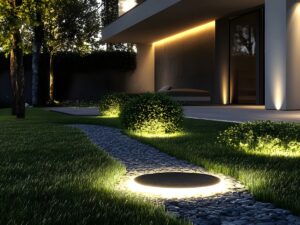
Pathway and entrance lighting are where safety and aesthetics meet, especially when guests are arriving after dark. Low profile fixtures placed at regular intervals along walks, driveways, and steps help people see edges and changes in elevation without flooding the yard with light. Paired with subtle lighting at the front door, this creates a clear visual path that feels both welcoming and secure. Warm color temperatures work well here, since they flatter most exterior materials and feel more comfortable to the eye than very cool white options.
Entrance areas are also a natural place to combine permanent landscape lighting with seasonal decor. A few carefully aimed fixtures can highlight wreaths, garlands, or planters while still lighting door hardware and thresholds. Because these lights are useful all year, many homeowners choose to upgrade permanent fixtures and then layer holiday pieces on top. Done well, this approach keeps walkways safe, showcases decorations, and maintains a calm, cohesive look from the street.
By treating holiday lights as part of a broader outdoor lighting plan, and by using professional support where the design or access is complex, Atlanta homeowners can get landscape lighting for holiday curb appeal that looks polished, runs safely, and is easier to repeat each year.
How Does 3D Design Help Visualize and Plan Your Holiday Landscape Lighting?

When you are planning landscape lighting for holiday curb appeal, it can be hard to picture how everything will look once the sun goes down. That is where 3D design makes a real difference. A three dimensional rendering gives you a realistic preview of your home at night, showing how roofline lights, uplights on trees, and pathway fixtures will actually read from the street. Instead of guessing where to place a spotlight or how bright a string of lights should be, you can see the full layout in context before any equipment is installed.
Because the model captures architecture, plants, and grade changes, it also reveals how shadows will fall and whether certain areas will feel too bright or too dark. You can test different ideas such as a simple warm white outline, a more layered design that includes tree uplighting, or a color accent on a single focal point. Adjustments to beam spread, fixture angle, or spacing happen in the design phase rather than ladder in hand, which saves time and reduces frustration.
3D design is also useful for spotting practical issues early. If a planned fixture would create glare in a window, wash out a wreath, or crowd existing shrubs, you will see it in the rendering and can adjust before anything is purchased. That kind of preview makes it easier to fine tune landscape lighting for holiday curb appeal so it feels intentional and well balanced instead of cluttered or uneven.
For households that want a classic look year after year, saving the 3D model also makes it simple to repeat or slightly update the same design in future seasons without starting from scratch.
What Are The Advantages Of Using 3D Renderings For Holiday Lighting Plans?
The main advantage of 3D renderings is clarity. Everyone involved can see the same nighttime scene, which makes decisions faster and reduces the back and forth that comes with rough sketches or verbal descriptions. Homeowners can compare a few design options side by side, such as different color temperatures or fixture counts, and choose the one that best matches their taste and budget. That visual certainty is especially helpful when more than one person has input on how the house should look for the holidays.
Another benefit is more accurate planning. Because the software tracks each fixture and connection point, it is easier to produce a reliable materials list before installation. You get a clear idea of how many path lights, spotlights, or roofline strings are needed and where they will go. That level of detail helps keep costs predictable and reduces waste from overbuying. It also supports better energy planning, since you can see how many watts or volt amps the full design will require and adjust if needed.
3D renderings can even simulate color and brightness changes over time. If you are considering limited motion effects or occasional color scenes, the design can preview how those will feel from the street and from inside the home. That makes it easier to keep things festive without creating a display that feels too busy.
Taken together, these advantages mean homeowners who use 3D design are more likely to end up with landscape lighting for holiday curb appeal that matches what they imagined in their heads. The design session becomes a low risk space to experiment, refine, and confirm details so that installation day is focused on careful execution rather than last minute changes.
Frequently Asked Questions
What are the best practices for installing holiday landscape lighting?
Start with a plan: identify the features you want to highlight and sketch sightlines from the street. Mix uplights, pathway fixtures, and accents to build depth. Securely mount fixtures and conceal wiring where possible, and choose timers or smart controls to automate schedules and save energy. Follow local electrical codes and safety guidelines—if you’re unsure, consult a licensed installer to avoid common mistakes.
How can I choose the right color temperature for my holiday lights?
For a warm, inviting look, aim for 2700K–3000K; that range flatters brick, stone, and siding. If you want a more festive feel, introduce color sparingly on focal elements and pair it with warm-white outlining to keep the overall composition cohesive. When possible, test color temperatures in situ or with a 3D mockup to see how they interact with your exterior finishes.
What maintenance is required for holiday landscape lighting?
Check fixtures regularly for burned-out bulbs and clean lenses to preserve brightness. Inspect wiring and connections for wear and address issues before they worsen. Keep smart-control software updated and, after the season, remove and store decorations and any fragile fixtures properly. If you used a professional installer, consider scheduling an annual maintenance visit to extend fixture life.
Can I use solar-powered lights for holiday decorations?
Solar lights are a good, low-energy option for holiday accents, especially where daytime sun exposure is reliable. Be mindful of run-time limits in winter and position solar panels for maximum sun. For consistent all-night illumination, pair solar with wired LED fixtures or choose higher-capacity solar products designed for cooler months.
How do I ensure my holiday lighting is energy-efficient?
Choose LED fixtures, which use far less energy than incandescent bulbs, and look for ENERGY STAR-rated products when available. Use timers or smart controls to limit operating hours, and place lights strategically—highlight key features rather than illuminating every surface. These steps reduce energy use while giving a more polished result.
What are some creative ways to incorporate landscape lighting into holiday themes?
Accent wreaths or garlands with focused spotlights, use warm-white outlining for a classic base, and add a single colored tree or porch accent for visual interest. Create a winter palette with blue-and-white accents or layer uplighting and string lights for depth. Mix a few techniques—spotlights, path lights, and discreet string lights—to achieve a dynamic yet tasteful seasonal display.
Conclusion
Strategic landscape lighting is the finishing touch that transforms your Metro Atlanta home into a breathtaking holiday showcase. By highlighting architectural details, illuminating walkways, and creating a warm, festive glow, you not only boost your curb appeal but also extend a welcoming invitation to all who pass by. At Legacy Landscape Design, we specialize in custom holiday lighting installations that capture the magic of the season while showcasing the beauty of your property. Ready to make your home the brightest on the block this holiday season? Call 770-427-2026 or fill out our contact form today for a design consultation. Let’s light up your holidays with elegance and style.