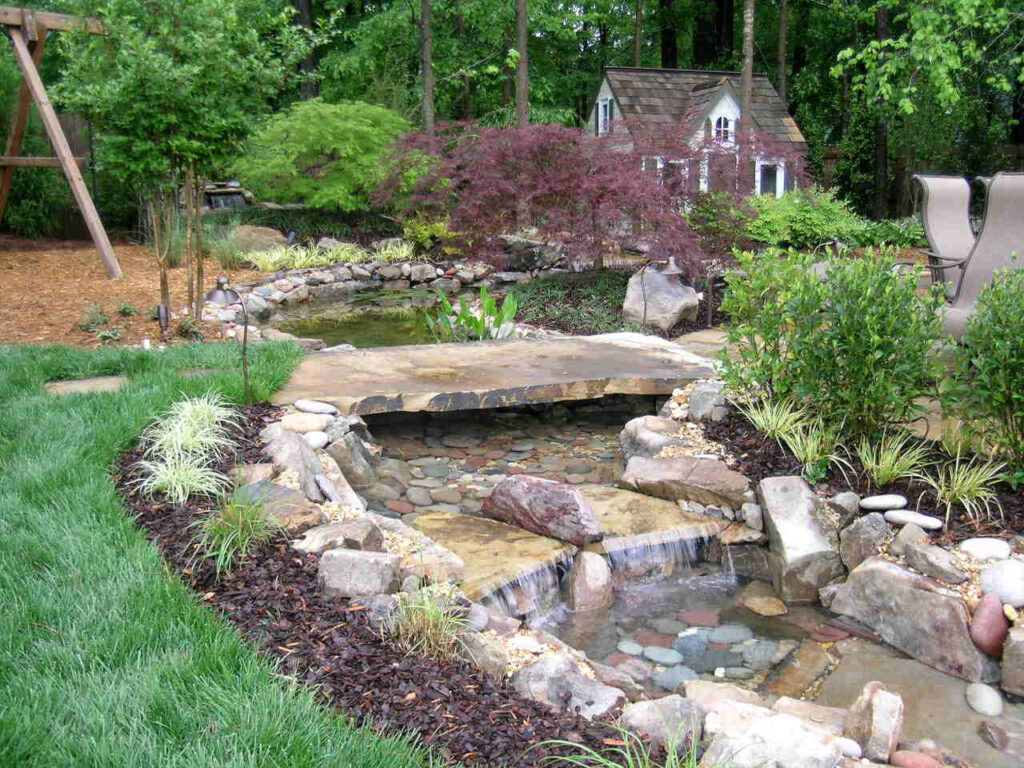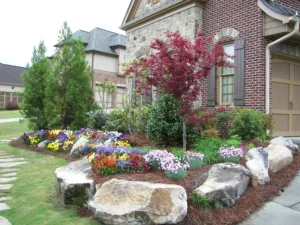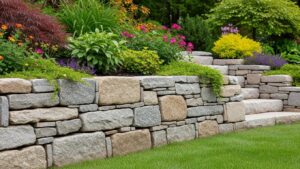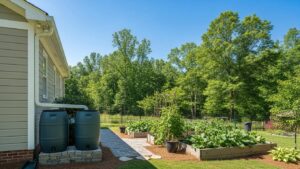
A walkway can do far more than lead from one part of your yard to another. Its shape, material, and placement can guide the eye through the landscape, define garden areas, and turn an ordinary route into a standout design feature.
Custom garden paths and walkway design ideas offer countless ways to add structure and personality to an outdoor space. Natural stone can create an organic, relaxed feel, while pavers, brick, gravel, or mixed materials can introduce pattern, contrast, and architectural character.
Thoughtful curves, borders, lighting, and surrounding plantings can further transform how the yard looks and flows. Whether you’re connecting a patio, garden, entrance, or hidden seating area, a well-designed path can make your landscape more functional, inviting, and visually memorable.
Walkway Design Ideas for Beautiful Garden Paths
How to Plan a Custom Garden Walkway From Layout to Installation
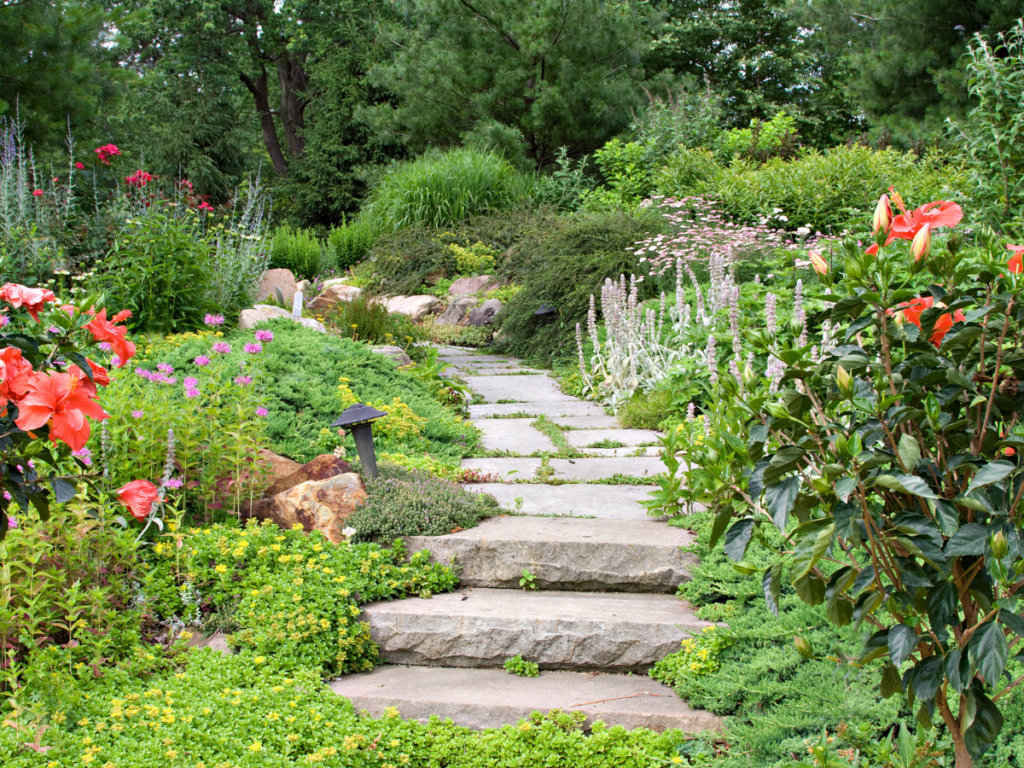
A successful garden path starts long before the first stone or paver is installed. Good walkway design considers how people naturally move through the yard, where the path needs to lead, how water drains across the property, and how the finished surface will relate to the surrounding landscape.
Appearance matters, but a beautiful path that feels awkward to walk on or develops drainage problems will quickly become frustrating.
The design process generally moves through four stages: evaluating the site, establishing the route and dimensions, choosing suitable materials, and preparing the base for installation. Taking these steps in the right order helps create a walkway that feels like a deliberate part of the landscape rather than an element added afterward.
Start With How the Walkway Will Be Used
Before choosing stone colors or paver patterns, determine the path’s purpose. A front walkway used every day has different requirements from a narrow garden trail that receives occasional foot traffic.
Primary walkways between a driveway, entrance, patio, or outdoor living area usually benefit from a relatively direct route and enough width for comfortable movement.
Secondary garden paths can be narrower and more informal, especially when their purpose is to guide visitors through planting beds or toward a focal point.
Walk the proposed route before finalizing it. Pay attention to where people already tend to cross the yard. Existing foot traffic often reveals the most practical route, even if it differs from the path originally imagined on paper.
Shape the Route Around the Landscape
Straight and curved paths create different visual effects. Neither is inherently better.
Straight walkways tend to suit formal landscapes and direct connections between destinations. Curved paths can soften a yard and work naturally around planting beds, mature trees, slopes, and other landscape features.
Curves should have a reason, however. Too many unnecessary bends can make a path feel inconvenient rather than inviting.
A strong walkway design also considers what the visitor sees while moving through the space. A path might frame a garden, approach a front entrance, lead toward a seating area, or gradually reveal another section of the yard.
Thinking about these sightlines can turn a basic connection between two points into an intentional landscape feature.
Evaluate Slope, Drainage, and Site Conditions
Drainage should be addressed before materials are selected or excavation begins. Water that collects beneath or alongside a walkway can contribute to erosion, shifting, settlement, and deterioration over time.
Evaluate the natural grade of the property and determine where stormwater currently flows. The finished walkway should direct water appropriately rather than creating a barrier that sends runoff toward the house, planting beds, or neighboring areas.
Sloped properties require additional planning. Depending on the grade, a walkway may need gradual elevation changes, steps, retaining features, or adjustments to its route. Existing tree roots, irrigation lines, utilities, and drainage systems should also be identified before excavation.
Choose Materials for Both Appearance and Performance
Material selection should follow the functional assessment rather than drive it. Natural stone, concrete pavers, brick, gravel, and stepping stones can all create attractive garden paths, but they behave differently under regular use.
Consider foot traffic, climate, maintenance, surrounding architecture, and the desired level of formality. A loose gravel path may work beautifully through an informal garden but may be less practical for a primary entrance.
Large natural stones can create an organic appearance, while manufactured pavers offer consistent dimensions that make it easier to produce a smooth, uniform walking surface.
Color and texture should also connect the path to existing patios, retaining walls, exterior finishes, or other hardscape elements without necessarily matching them exactly.
Prepare the Base for Long-Term Stability
Installation quality has a major influence on how well a walkway performs. Simply placing attractive material over soil can lead to uneven surfaces and movement as the ground settles.
Preparation varies by material and site conditions, but the process may include excavation, grading, compacting the subgrade, installing an appropriate aggregate base, and providing edge restraint where needed. The finished surface should remain stable while maintaining proper drainage.
This is where professional planning can be particularly valuable. A landscape contractor can evaluate site-specific conditions and determine the appropriate preparation method rather than applying the same installation approach to every yard.
Connect the Walkway to the Rest of the Landscape
The final step is considering what happens around the path. Planting beds, groundcovers, landscape lighting, edging, and transitions into patios or entrances can make a walkway feel integrated with the yard.
For example, low-growing plants can soften the edges of a stone path, while lighting can improve visibility along routes used after dark. Wider areas can also be incorporated at intersections or destinations where people naturally pause.
Custom walkway design works best when circulation, drainage, materials, installation, and landscaping are planned as one system. By addressing those practical decisions first, homeowners can create garden paths that improve how the property functions while adding structure and character to the landscape.
How Client Collaboration Leads to a More Functional Walkway Design
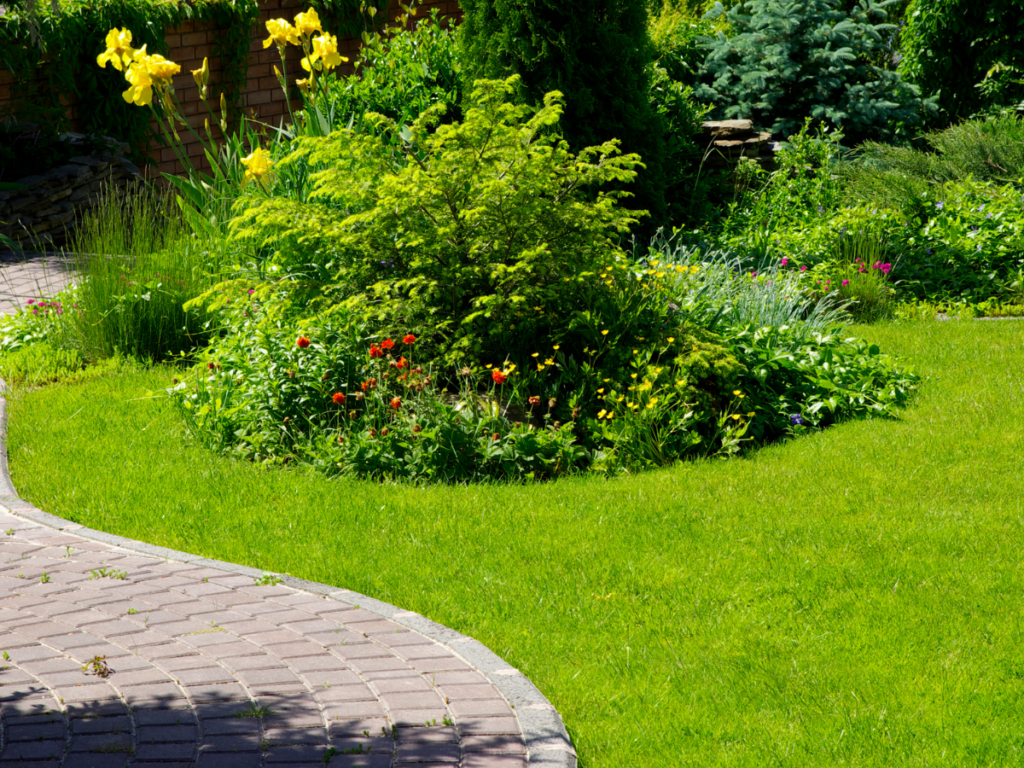
A custom walkway should reflect more than a designer’s preferred materials or landscaping style. It needs to work for the people who use the property every day. That makes homeowner input especially valuable during the planning process.
Client collaboration helps translate practical needs, personal preferences, and long-term landscaping plans into a walkway design that makes sense for the specific property.
A homeowner may know, for example, that guests routinely enter through a side gate, children cut across a certain part of the lawn, or a garden area will eventually become an outdoor seating space.
Those details may not be obvious during a basic site inspection, but they can significantly influence the best route and layout.
Rather than simply approving a finished concept, homeowners can provide useful information throughout the design process so that aesthetic decisions support how the landscape actually functions.
Start the Consultation With How the Property Is Used
An effective design consultation should go beyond asking which materials or colors the homeowner prefers. One of the first questions should be how people currently move through the property.
Daily routines often reveal where walkways are most useful. Consider connections between the driveway and front entrance, patio and lawn, garden and outdoor living areas, side gates, sheds, pools, and other frequently visited spaces. Existing worn areas in the grass can also indicate routes people naturally prefer.
Designers should also understand who will regularly use the walkway. A household that frequently entertains may need wider paths that allow guests to walk comfortably together. A quiet garden path, by comparison, can often be narrower and more informal.
This conversation gives the project a functional foundation before decisions about stone, pavers, patterns, or decorative details begin.
Turn Design Preferences Into Specific Visual Decisions
Terms such as “natural,” “modern,” “rustic,” or “elegant” can mean different things to different people. Collaboration helps turn those broad preferences into concrete design choices.
Homeowners can identify exterior features they want the walkway to complement, such as brickwork, siding, patios, retaining walls, garden structures, or existing hardscaping. Reference photos can also help communicate preferences for path shape, stone texture, joint spacing, edging, and planting style.
The goal is not necessarily to match every existing material. In many landscapes, a complementary material creates a more interesting and intentional result. A designer can help determine which elements should visually connect and where contrast may improve the overall composition.
Balance Homeowner Preferences With Site Conditions
Not every walkway idea will work equally well on every property. Soil conditions, drainage, slopes, mature trees, existing utilities, and available space can all affect what can reasonably be built.
This is where collaboration becomes more valuable than simply following a client’s initial concept. A homeowner might prefer a particular route, for instance, while a site assessment reveals that the location has persistent drainage problems or would interfere with major tree roots.
A good design process explains those constraints and develops alternatives rather than quietly changing the plan. The route might be adjusted, another paving material selected, or the shape modified to achieve a similar visual effect while improving long-term performance.
Review Materials in the Context of Maintenance
Material discussions should include more than appearance and installation cost. Homeowners also need to understand what living with the finished walkway will involve.
Natural stone, concrete pavers, gravel, brick, and other materials have different maintenance characteristics. Joint material may need occasional attention, loose surfaces may require replenishment, and some materials can develop staining or biological growth depending on exposure and surrounding vegetation.
Discussing these considerations early helps homeowners choose materials that fit both their preferred look and the amount of ongoing upkeep they are comfortable managing.
Use Design Reviews to Catch Problems Before Construction
Changes are generally easier to make during planning than after excavation and installation begin. Reviewing the proposed route, width, curves, transitions, materials, and surrounding landscaping gives both homeowner and designer an opportunity to identify issues before construction.
A site walk can be particularly useful. Marking or visualizing the proposed path on the property allows homeowners to experience the route at full scale rather than relying entirely on a drawing.
This stage is also the time to confirm details such as connections to patios and entrances, lighting locations, steps, edging, planting areas, and future landscape improvements.
Plan for How the Landscape May Change
Strong walkway design should accommodate not only the yard as it exists today but also reasonable future plans.
A homeowner may eventually add a patio, outdoor kitchen, garden bed, pool, or expanded entertainment area. Knowing about those plans can influence where a walkway ends, how wide it should be, or whether a junction should be incorporated now.
For a landscape company such as Legacy Landscape Design, collaboration can therefore serve a practical purpose beyond personalization. It gives the designer information that cannot be gathered from measurements alone.
Combining that homeowner knowledge with professional site assessment can produce a path that fits the property’s appearance, circulation patterns, maintenance expectations, and long-term landscape plan.
How to Choose Sustainable Materials for Garden Paths
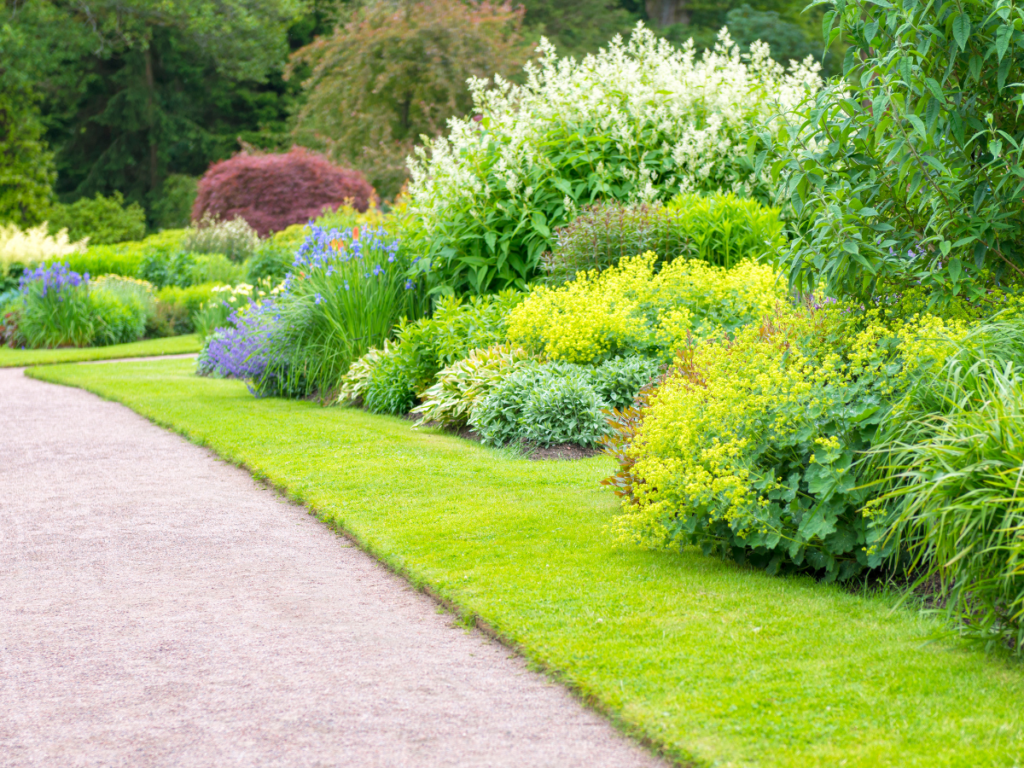
A sustainable garden path is not defined by one specific paving material. The better approach is to consider where materials come from, how long they are likely to last, how they affect stormwater, and what maintenance or replacement they will require over time.
For homeowners planning a new walkway design, this means looking beyond appearance alone. A material that lasts for decades and works with the site’s drainage may be a better environmental choice than one marketed as “green” but poorly suited to the property.
Local availability, installation method, existing soil conditions, and opportunities to reuse materials should all be part of the decision.
Natural Stone Offers Durability and a Timeless Appearance
Natural stone is a strong option for homeowners who want a garden path that feels integrated with the surrounding landscape. Flagstone and other flat stones can create anything from a formal continuous walkway to loosely spaced stepping paths through planting areas.
One sustainability advantage is longevity. Properly selected and installed stone can remain serviceable for many years, and individual pieces can often be repositioned or reused if the landscape changes.
Locally or regionally sourced stone may also reduce the transportation involved in bringing heavy materials to the project.
The environmental performance of a stone path depends partly on installation. Wide mortar joints or an impermeable base will behave differently from stone installed with permeable joints or spaced over a suitable aggregate base.
For homeowners concerned about stormwater, the entire walkway system matters, not just the surface material.
Permeable Pavers Can Help Manage Stormwater
Conventional hard surfaces can increase runoff because rainwater cannot easily soak into the soil below. Permeable paving systems are designed differently. Open joints or porous surfaces allow water to move through the pavement and into an appropriately constructed aggregate base beneath it.
That makes permeable pavers worth considering in areas where reducing surface runoff is a priority. They can be used for garden paths while still providing the clean, stable walking surface associated with manufactured pavers.
However, simply choosing a product labeled “permeable” does not guarantee effective drainage. The underlying soil, base preparation, grading, joint material, and installation method all influence how the system performs.
Poor installation can undermine the drainage advantages the material was selected to provide.
Reclaimed Materials Can Give Existing Products a Second Life
Reclaimed brick, stone, and concrete pavers can reduce demand for newly manufactured materials while giving a walkway distinctive character.
Salvaged materials are particularly appealing for older homes, cottage gardens, and informal landscapes where slight variations in color and texture contribute to the design.
Condition matters. Reclaimed paving should be inspected for cracking, deterioration, excessive wear, or other damage before reuse. Not every salvaged product will be suitable for a walking surface, particularly where a smooth and predictable path is important.
Availability can also affect the design. A limited quantity of reclaimed brick, for example, might work better as an accent border than as the primary paving material for a long walkway.
Gravel Provides a Permeable Option for Informal Paths
Gravel can work well for secondary garden paths because it allows water to move through the surface and requires less rigid construction than many solid paving systems. It also complements informal and naturalistic landscapes.
Its limitations should be considered before installation. Loose gravel can migrate beyond the edges of the path, collect debris, and require occasional replenishment or leveling. It may also be less suitable where smooth accessibility is a priority.
Edging, proper base preparation, and appropriate gravel size can make a significant difference in how well the path performs. In the right location, gravel can provide an attractive and relatively simple solution. In the wrong one, maintenance can outweigh its initial advantages.
Consider Sustainability Across the Entire Walkway Design
Material choice is only one part of creating a more sustainable path. A thoughtfully planned route can reduce unnecessary paving, while proper grading can help manage water without creating erosion elsewhere in the yard.
Durable construction also reduces the likelihood that sections will need frequent repair or replacement.
Homeowners can evaluate potential materials by asking a few practical questions: Can existing materials on the property be reused? Is the new material available locally or regionally? How long is it expected to remain functional? Can water pass through or around the walkway appropriately? What maintenance will be required over its life?
This broader approach prevents sustainability from becoming a product label rather than a design principle.
For a landscape company such as Legacy Landscape Design, sustainable walkway design can involve selecting materials and construction methods according to the conditions of each property.
Natural stone, permeable pavers, reclaimed materials, and gravel can all play a role, but the most appropriate choice is the one that balances drainage, durability, maintenance, function, and the character of the surrounding landscape.
How 3D Visualization Helps Homeowners Make Better Walkway Design Decisions
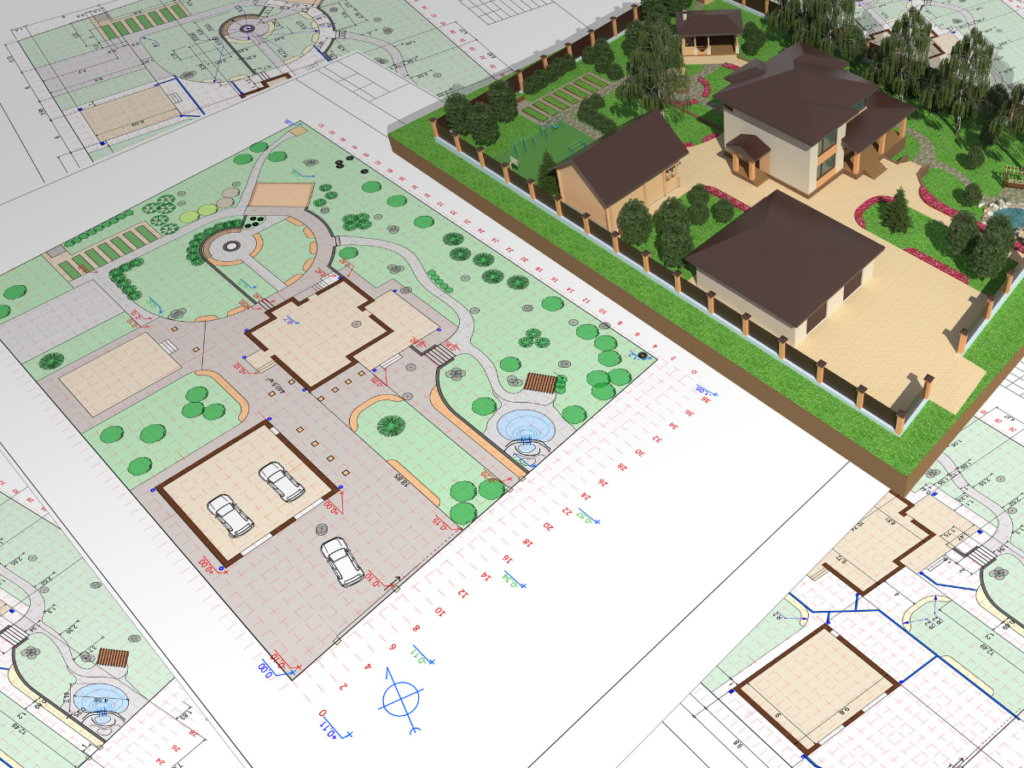
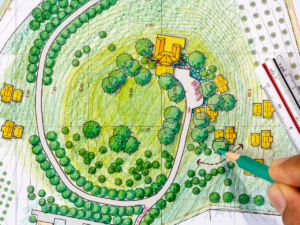
Landscape plans can communicate dimensions and placement, but they do not always make it easy to imagine how a new path will actually look from ground level.
A walkway that seems appropriately sized on a two-dimensional plan may feel too narrow, too dominant, or visually disconnected from the house once viewed in context.
3D landscape visualization helps close that gap. By creating a digital representation of the proposed project, designers can show how a walkway may relate to the home, lawn, planting beds, patios, retaining walls, and other landscape features before construction begins.
For homeowners, the main advantage is not simply seeing an attractive rendering. A useful 3D model makes important design decisions easier to understand, compare, and refine while changes are still relatively simple to make.
See the Walkway in Context With the Entire Property
Walkways rarely function as isolated landscape features. They connect destinations and influence how the different areas of a yard relate to one another.
With 3D visualization, homeowners can evaluate a proposed path from multiple viewpoints. They may be able to see how it approaches the front entrance, curves around a planting bed, connects with a patio, or moves through a sloped portion of the property.
This context can reveal design issues that are harder to notice on a flat plan. For example, a path might appear balanced when viewed from above but look disproportionately wide next to a small garden. A curve that seems subtle on paper might feel unnecessary when viewed from eye level.
Seeing those relationships before installation gives the design team an opportunity to make informed adjustments.
Compare Materials Before Committing to Installation
Choosing paving materials from a small sample can be difficult because color, scale, texture, and pattern look different when repeated across an entire walkway.
A 3D model can help homeowners compare how natural stone, concrete pavers, brick, or other materials may affect the character of the landscape. Designers can also explore variations in laying patterns, borders, joint spacing, and combinations of materials.
Visualization should not replace physical samples, since digital displays cannot perfectly reproduce real-world color and texture. Instead, the two can work together. Renderings help homeowners understand the overall visual effect, while physical samples provide a more accurate sense of the material’s actual surface and color.
Test Width, Curves, and Transitions Before Construction
Some of the most important walkway design decisions involve proportions rather than materials.
A visualization can show whether the proposed width feels appropriate for the path’s purpose and surrounding landscape. It can also help evaluate the shape of curves, transitions between surfaces, placement of steps, and connections with doors, driveways, patios, or other walkways.
This becomes particularly useful when a project contains several hardscape elements. The homeowner can see whether the walkway visually competes with a patio or retaining wall, for instance, or whether the different elements feel connected.
Design alternatives can then be compared before excavation begins.
Coordinate Walkways With Planting and Landscape Lighting
A path changes how surrounding landscaping is experienced, so planting and lighting should be considered alongside the hardscape itself.
Three-dimensional models can help visualize how shrubs, ornamental grasses, groundcovers, or other plants frame the walkway. Designers can assess whether mature plants could eventually crowd the path or whether planting beds need additional depth to maintain the intended proportions.
Landscape lighting can also be incorporated into the model to explore fixture placement along steps, curves, entrances, and other areas where visibility matters. While a rendering cannot replicate actual nighttime conditions perfectly, it can help establish where lighting belongs within the overall plan.
Make Client Feedback More Specific
One practical benefit of visualization is that it gives homeowners something concrete to respond to.
Instead of saying that a concept “doesn’t feel quite right,” a client can identify a particular concern: the path appears too wide, the stone feels too formal, a curve should begin farther from the house, or the planting bed needs more space.
That specificity makes collaboration more productive. Designers can revise individual elements while preserving parts of the plan the homeowner already likes.
3D visualization can be particularly valuable for larger landscape projects where walkways interact with patios, outdoor kitchens, gardens, pools, retaining walls, or other planned features.
Use Visualization as a Planning Tool, Not a Guarantee
A rendering should ultimately be treated as a design aid rather than a photographic prediction of the completed project. Natural stone varies, plants grow and change, site conditions may require adjustments, and lighting affects how materials appear in the finished landscape.
For companies such as Legacy Landscape Design, 3D visualization can strengthen the walkway design process by giving homeowners a clearer way to evaluate proposed layouts and communicate feedback before construction.
Used alongside site measurements, material samples, drainage planning, and professional installation knowledge, it can reduce uncertainty and help both homeowner and designer reach a more clearly defined final plan.
How to Maintain Walkways and Garden Paths for Long-Term Performance
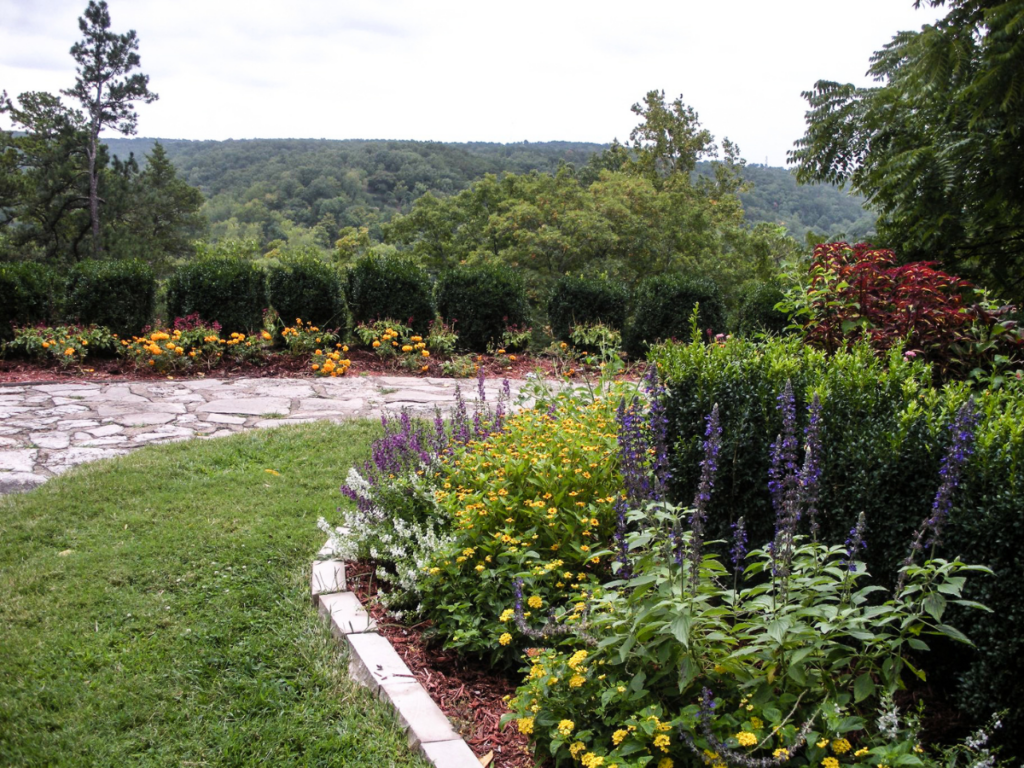
A well-built walkway is designed for years of use, but outdoor surfaces still face constant exposure to rain, soil movement, plant growth, foot traffic, fallen leaves, and changing temperatures.
Routine maintenance helps preserve the appearance of the path while catching small problems before they develop into loose stones, uneven surfaces, drainage issues, or more extensive repairs.
Maintenance should also be considered during the initial walkway design process. Material choice, drainage, edging, surrounding vegetation, and installation quality all influence how much upkeep a path will require over its lifetime.
Keep Walkway Surfaces Clear and Clean
Leaves, soil, grass clippings, and organic debris should be removed periodically rather than allowed to accumulate. Besides making a walkway look neglected, damp organic matter can encourage staining and create slippery areas.
Cleaning methods should match the paving material. Sweeping and rinsing may be enough for routine maintenance, while stubborn stains may require a cleaner specifically formulated for stone, concrete, brick, or pavers.
Avoid assuming that aggressive pressure washing or strong chemicals are suitable for every surface. Some materials, finishes, sealants, and joints can be damaged by overly harsh cleaning.
Pay particular attention to shaded areas and sections beneath trees, where moisture and debris may linger longer.
Inspect Walkways After Severe Weather and Seasonal Changes
A quick visual inspection can reveal problems while they are still relatively manageable. Look for cracked or shifting pavers, loose stones, deteriorating joints, damaged edging, erosion, and areas where water collects after rainfall.
Drainage deserves special attention. Persistent puddling or soil washing onto the path may indicate that surrounding grades, drainage channels, or the walkway base need attention. Simply cleaning the surface will not correct an underlying water-management problem.
Changes in level also matter because raised or sunken sections can become trip hazards. If movement continues after a repair, the problem may originate below the surface rather than with the paving material itself.
Match Maintenance to the Walkway Material
Different surfaces age differently, so there is no single maintenance routine for every garden path.
Natural stone may need periodic attention to joints and individual stones that have shifted. Concrete pavers can require joint maintenance, weed removal, or resetting if sections become uneven.
Gravel paths typically need occasional raking and redistribution, particularly where material migrates toward lawn or planting beds.
Permeable paving requires its own approach. Because these systems rely on open joints or porous surfaces to allow water infiltration, accumulated sediment can gradually interfere with drainage performance. Cleaning methods should preserve those drainage pathways rather than clogging them.
Understanding these differences during walkway design can help homeowners choose a surface that fits both the appearance they want and the amount of ongoing maintenance they are comfortable managing.
Control Weeds and Plant Growth Before They Affect the Path
Plants soften the appearance of hardscape, but they also need to be managed as they mature. Groundcovers can creep across walking surfaces, shrubs can narrow usable space, and roots from nearby plants may eventually affect paving.
Trim vegetation before it obstructs the path and remove weeds from joints before they become established. When planning new landscaping, consider the mature size and root behavior of plants rather than judging spacing only by how small they are at installation.
Good planting decisions can reduce maintenance while preserving the intended relationship between the walkway and surrounding garden.
Repair Small Problems Before They Spread
A loose paver or cracked stone may seem minor, but delaying repairs can allow water intrusion, erosion, or continued movement to affect adjacent areas.
The appropriate repair depends on the cause. Replacing a damaged unit may solve an isolated problem, while repeated settling could indicate inadequate base preparation, poor drainage, or soil movement. Persistent issues are worth evaluating rather than repeatedly treating the visible symptom.
Plan for Maintenance From the Beginning
Long-lasting paths are easier to maintain when upkeep is considered before installation. A thoughtful walkway design accounts for drainage, proper base preparation, durable edging, suitable materials, nearby vegetation, and how the path will actually be used.
Legacy Landscape Design can incorporate these long-term considerations when planning custom walkways and garden paths.
Designing for both appearance and maintenance from the outset helps create an outdoor path that remains practical, safe, and visually connected to the surrounding landscape as it ages.
Conclusion
A thoughtfully designed garden path can do more than guide people through your yard. It can define outdoor spaces, highlight favorite landscape features, improve accessibility, and bring greater character to the overall design.
From natural stone and pavers to curved pathways surrounded by lush plantings, the right walkway can blend beauty with everyday functionality while complementing your home’s style.
For custom walkway design and professional landscaping solutions, choose Legacy Landscape Design. If you’re ready to transform your yard with beautiful, functional garden paths, call 770-427-2026 to speak with the team at Legacy Landscape Design or get your free quote today.